SCOPE
SCOPE
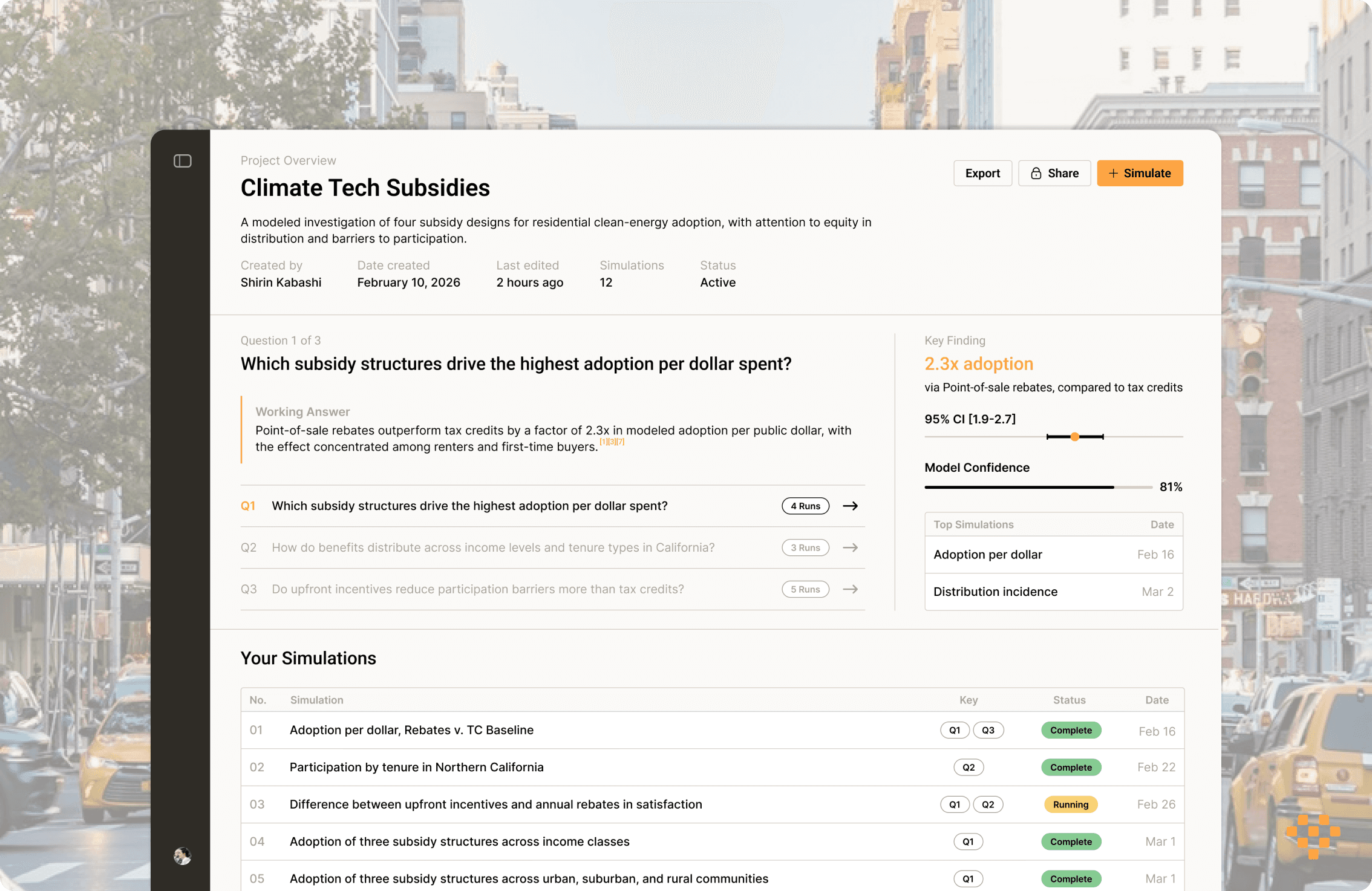
0 → 1 design for Prior Foundry's Project Dashboard and Creation flow. Prior Foundry simulates populations to prototype and stress-test policy ideas.
0 → 1 design for Prior Foundry's Project Dashboard and Creation flow. Prior Foundry simulates populations to prototype and stress-test policy ideas.
KEY USER
KEY USER
Policy analysts and government officials who need to validate proposals against real population dynamics before committing resources.
Policy analysts and government officials who need to validate proposals against real population dynamics before committing resources.
ROLE
ROLE
Founding Designer. Responsible for UI/UX, user research, identity design, and frontend engineering.
Founding Designer. Responsible for UI/UX, user research, identity design, and frontend engineering.
RESULTS
RESULTS
$5.2M
$5.2M
Raised seed round led by Relentless and a16z. Pitch spotlighted demonstrable traction with the newly designed product.
Raised seed round led by Relentless and a16z. Pitch spotlighted demonstrable traction with the newly designed product.
38+ countries
38+ countries
Secured the first early adopters across the world, including government agencies and international policy organizations.
Secured the first early adopters across the world, including government agencies and international policy organizations.
1/2
1/2
Halved project creation time while improving the quality of user inputs.
Halved project creation time while improving the quality of user inputs.
DESIGNING TRUST
DESIGNING TRUST
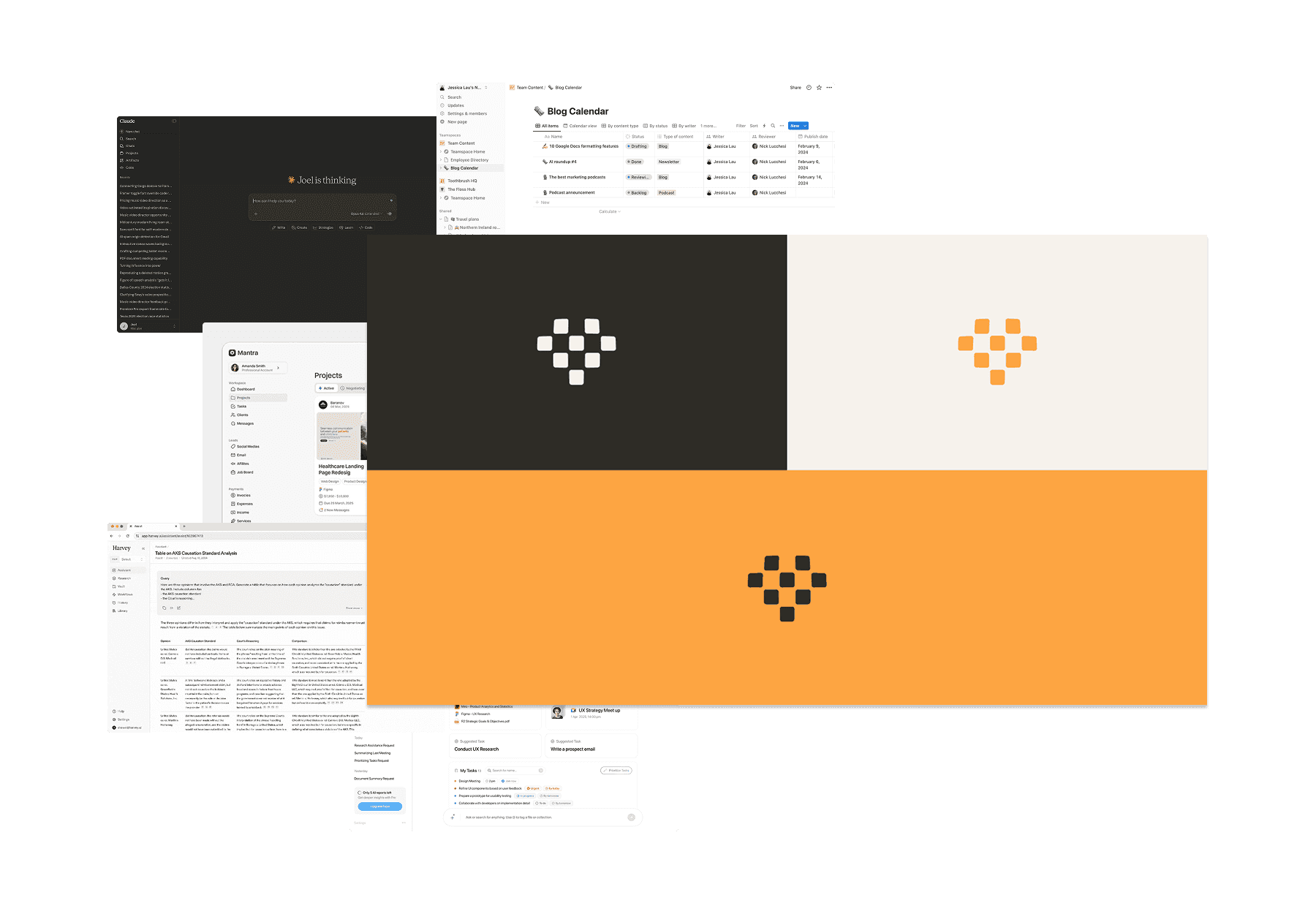
The product's users are expert analysts, meaning the interface needed to feel like a trustworthy peer.
I designed a restrained, high-clarity visual system that matched the software our users were already using like Notion and Harvey: minimal color, sharp typographic hierarchy, and deliberate whitespace.
The system I designed made the product feel human and credible in rooms where PowerPoint decks and PDFs are the status quo.
The product's users are expert analysts, meaning the interface needed to feel like a trustworthy peer.
I designed a restrained, high-clarity visual system that matched the software our users were already using like Notion and Harvey: minimal color, sharp typographic hierarchy, and deliberate whitespace.
The system I designed made the product feel human and credible in rooms where PowerPoint decks and PDFs are the status quo.
RESTRUCTURING THE UX ARCHITECTURE
RESTRUCTURING THE UX ARCHITECTURE
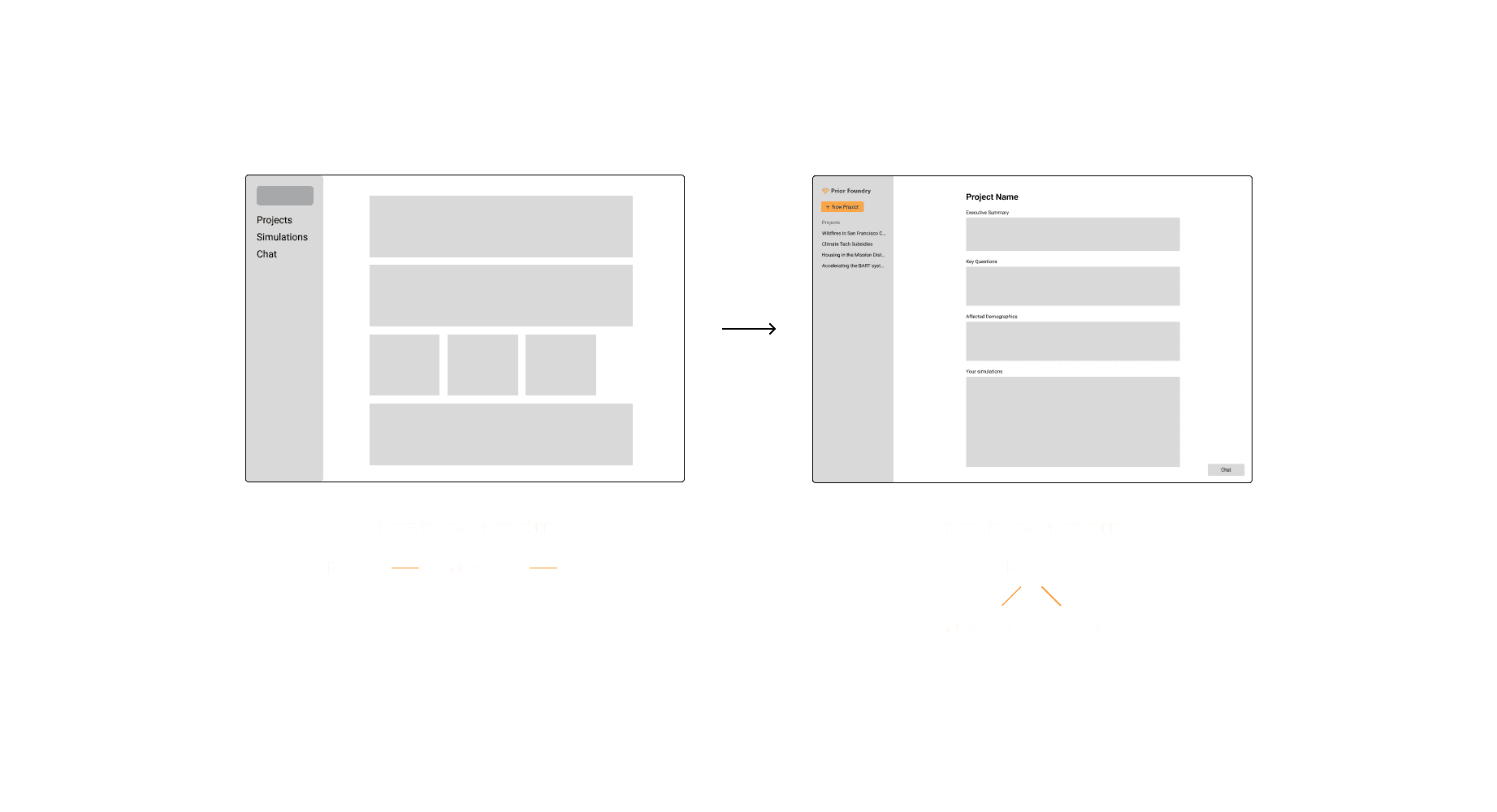
The original architecture separated three features into distinct areas of the product: Projects, Simulations, and Chat. Users kept getting lost and had difficulty understanding the product.
I restructured the experience architecture so Simulations lived inside their parent project, alongside the AI Chat feature that served as a contextualized research assistant. This collapsed what had been a fragmented product into a single coherent environment.
The original architecture separated three features into distinct areas of the product: Projects, Simulations, and Chat. Users kept getting lost and had difficulty understanding the product.
I restructured the experience architecture so Simulations lived inside their parent project, alongside the AI Chat feature that served as a contextualized research assistant. This collapsed what had been a fragmented product into a single coherent environment.
IN WITH THE NEW
IN WITH THE NEW
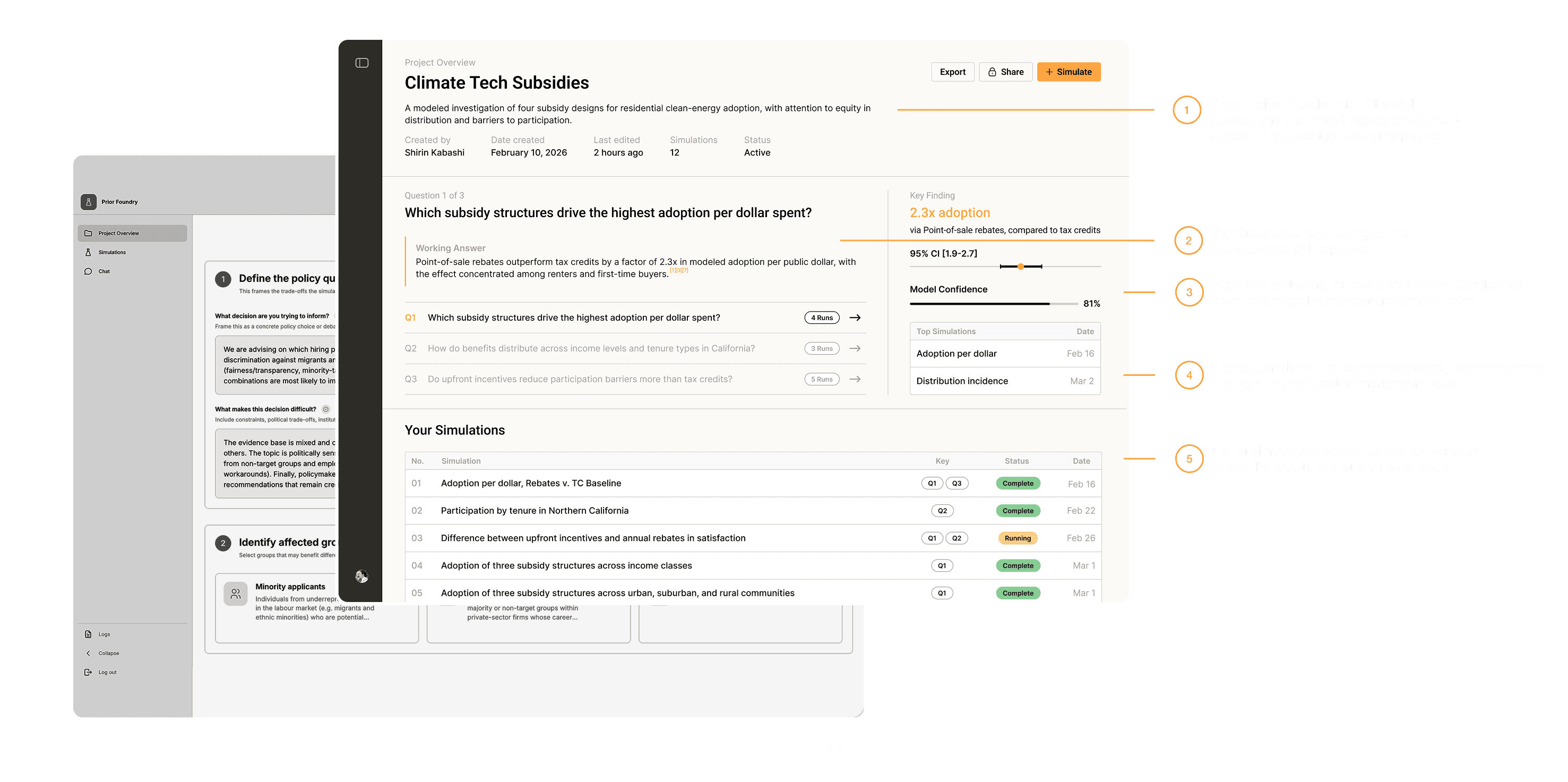
Testing with 4 different policy experts across the EU and US, I designed a UI to match how analysts were already thinking about policy interventions. The five most notable interaction decisions I made (above) were rooted in the same logic of how a given UI matches a user's mental model of policy problems.
Through user research, I additionally uncovered product opportunities for two new features: Confidence Scoring and Simulations Index.
EMPOWERING CREATION THROUGH CHAT
EMPOWERING CREATION THROUGH CHAT
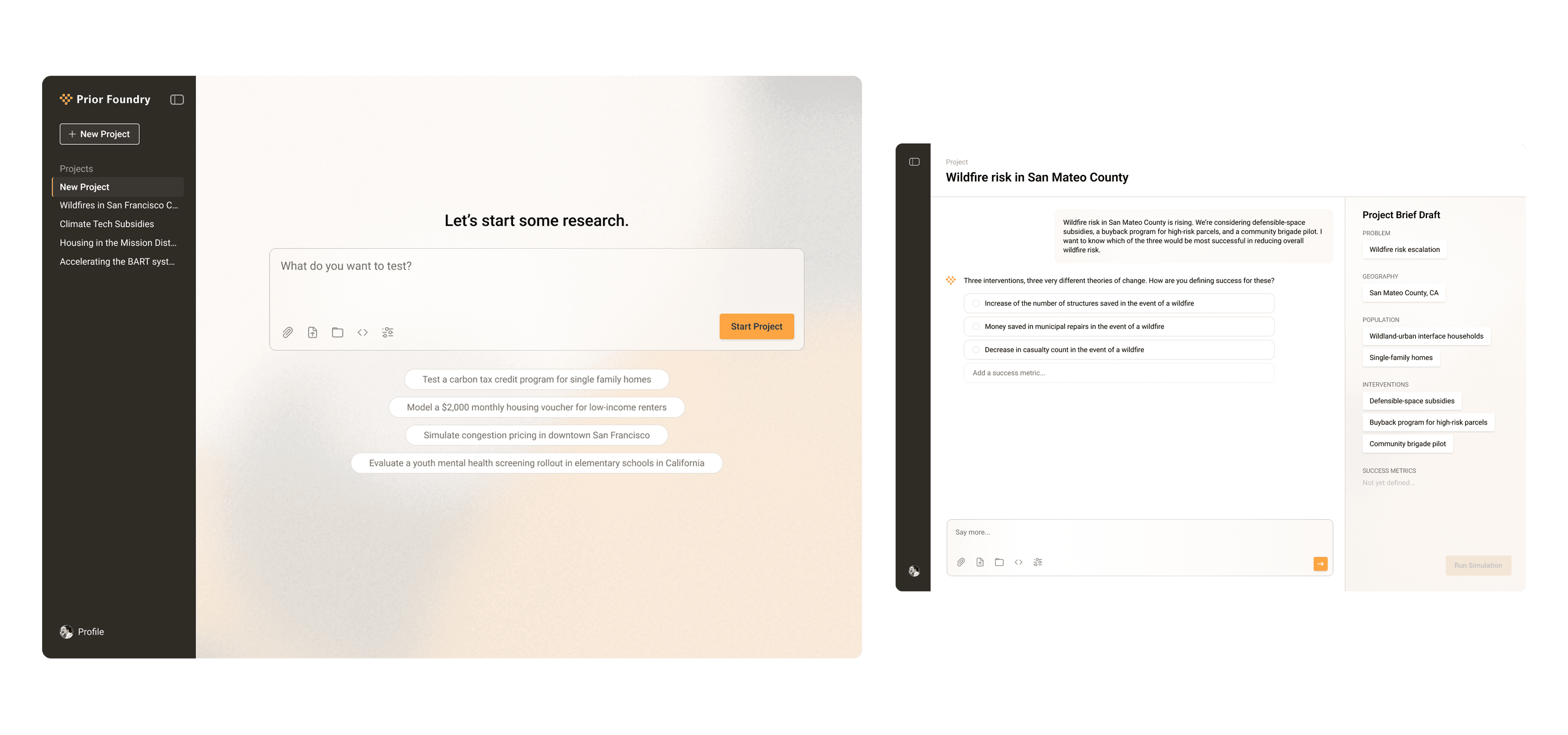
Before, Project Creation required significant user input — policy parameters, population definitions, success criterias. Asking for it all at once was overwhelming, leading to high dropoff rates.
I designed a chat-first flow that reveals complexity gradually. Users could keep their interaction conversational while the agent would gradually disclose the necessary details.
The result: creation time halved, success heightened, and the quality of inputs were notably more comprehensive.
Before, Project Creation required significant user input — policy parameters, population definitions, success criterias. Asking for it all at once was overwhelming, leading to high dropoff rates.
I designed a chat-first flow that reveals complexity gradually. Users could keep their interaction conversational while the agent would gradually disclose the necessary details.
The result: creation time halved, success heightened, and the quality of inputs were notably more comprehensive.

RESULTS
RESULTS
$5.2M
$5.2M
Raised seed round led by Relentless and a16z. Pitch spotlighted demonstrable traction with the newly designed product.
Raised seed round led by Relentless and a16z. Pitch spotlighted demonstrable traction with the newly designed product.
38+ countries
38+ countries
Secured the first early adopters across the world, including government agencies and international policy organizations.
Secured the first early adopters across the world, including government agencies and international policy organizations.
+9.2 simulations
+9.2 simulations
The average number of simulations in a project jumped from 1.1 to 10.3; users felt more empowered to use the product.
The average number of simulations in a project jumped from 1.1 to 10.3; users felt more empowered to use the product.
see also

Gemini Privacy Trace
Sway
Voting Groups